
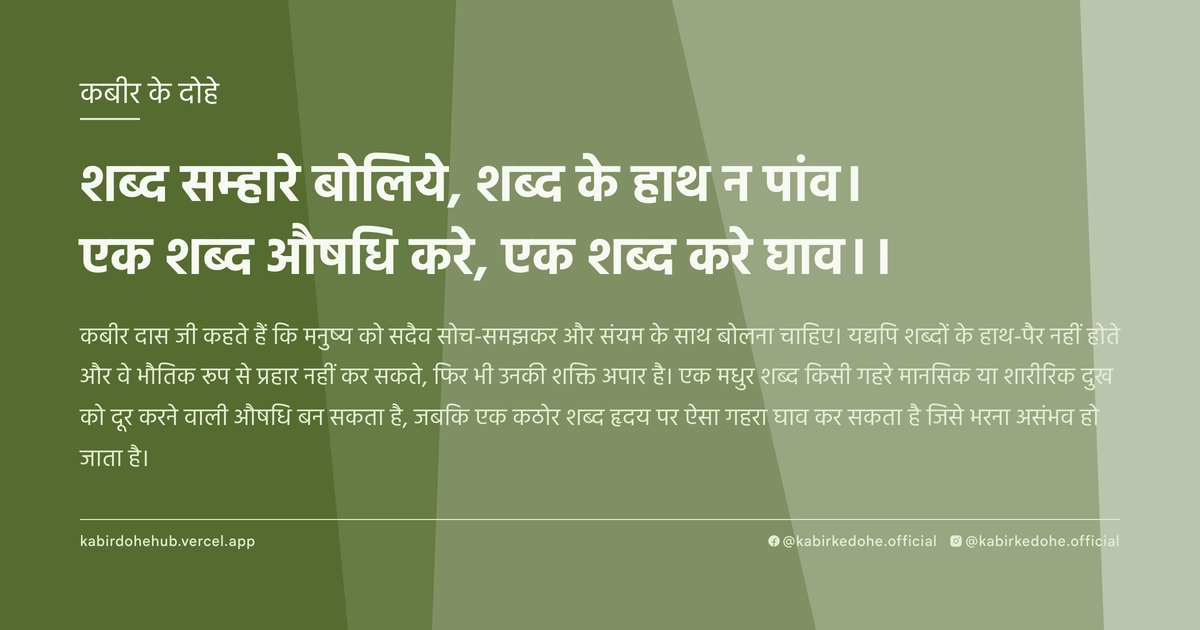
शब्द सम्हारे बोलिये, शब्द के हाथ न पांव।
एक शब्द औषधि करे, एक शब्द करे घाव।।
Shabd samhare boliye, shabd ke haath na paon. Ek shabd aushadhi kare, ek shabd kare ghaav.
इस पृष्ठ पर इस कबीर दोहे का अर्थ (meaning), हिंदी व्याख्या और अंग्रेज़ी अनुवाद, दार्शनिक विश्लेषण और व्यावहारिक जीवन सीख दी गई है। यह दोहा संयम (Self-discipline) विषय से जुड़ा है — Kabir doha meaning and explanation in Hindi and English.
अर्थ (Meaning):
कबीर दास जी कहते हैं कि मनुष्य को सदैव सोच-समझकर और संयम के साथ बोलना चाहिए। यद्यपि शब्दों के हाथ-पैर नहीं होते और वे भौतिक रूप से प्रहार नहीं कर सकते, फिर भी उनकी शक्ति अपार है। एक मधुर शब्द किसी गहरे मानसिक या शारीरिक दुख को दूर करने वाली औषधि बन सकता है, जबकि एक कठोर शब्द हृदय पर ऐसा गहरा घाव कर सकता है जिसे भरना असंभव हो जाता है।
Kabir urges us to speak with utmost mindfulness and restraint. Though words possess neither hands nor feet to physically strike, their impact is profound and enduring. A single compassionate word can act as a healing balm for a wounded soul, whereas a single harsh utterance can inflict a psychic wound deeper and more permanent than any physical injury.
व्याख्या (Interpretation):
शाब्दिक अर्थ यह है कि वाणी का प्रयोग सावधानी से करना चाहिए। आध्यात्मिक स्तर पर, यह 'शब्द' या 'नाद' की शक्ति की ओर संकेत करता है। निरगुण भक्ति में, शब्द केवल संचार का माध्यम नहीं, बल्कि चेतना का विस्तार है। जब हम क्रोध में बोलते हैं, तो हम माया के प्रभाव में होते हैं, जहाँ हमारा अहंकार (Ego) दूसरे को छोटा दिखाने का प्रयास करता है। यह द्वैत पैदा करता है। इसके विपरीत, प्रेमपूर्ण वाणी अद्वैत की स्थिति है, जहाँ बोलने वाला और सुनने वाला एक ही ब्रह्म के अंश बन जाते हैं। यहाँ 'घाव' का अर्थ केवल दुख नहीं, बल्कि अज्ञानता और अलगाव का बढ़ना है, जबकि 'औषधि' का अर्थ है आत्म-साक्षात्कार की ओर ले जाने वाला बोध।
Literally, this is a lesson in tact; spiritually, it is a treatise on the metaphysics of sound (Shabd). In the realm of Nirgun Bhakti, the 'Word' is not merely a linguistic tool but a vibration of consciousness. Speaking in anger is a manifestation of Maya, where the ego seeks to assert dominance, thereby reinforcing the illusion of duality. Conversely, speech rooted in love mirrors Advaita, dissolving the boundary between the speaker and the listener as both recognize their shared essence in Brahman. The 'wound' represents the deepening of ignorance and separation, while the 'medicine' symbolizes the awakening of the soul and the realization of oneness.
दार्शनिक विश्लेषण (Philosophical Analysis):
कबीर का यह दोहा उस सामाजिक परिवेश में लिखा गया था जहाँ धार्मिक कट्टरता और जातिगत श्रेष्ठता के कारण शब्दों का प्रयोग तलवार की तरह किया जाता था। कबीर ने ritualism (कर्मकांड) के बजाय आंतरिक शुद्धि पर बल दिया। उनका दर्शन सूफीवाद के 'इश्क' और वेदांत के 'अद्वैत' का संगम है। वे समझाते हैं कि बाहरी पूजा-पाठ व्यर्थ है यदि आपकी वाणी में करुणा नहीं है।
दार्शनिक रूप से, यह 'वाक-शक्ति' के मनोविज्ञान पर आधारित है। जब हम कठोर शब्द बोलते हैं, तो हम वास्तव में अपने भीतर के अंधकार को दूसरे पर प्रक्षेपित करते हैं। यह अहंकार का एक सूक्ष्म रूप है जो यह मानता है कि वह दूसरे को नियंत्रित या नष्ट कर सकता है। कबीर यहाँ चेतावनी देते हैं कि शब्द एक बीज की तरह हैं; जो बोया जाता है, वही फल मिलता है।
सूफी परंपरा में इसे 'लहजा' (बोलने का तरीका) कहा गया है, जो साधक के आंतरिक अनुशासन को दर्शाता है। यदि कोई व्यक्ति दावा करता है कि उसने ईश्वर को पा लिया है, लेकिन उसकी वाणी में अहंकार है, तो उसकी साधना झूठी है। सच्चा ज्ञान वही है जो विनम्रता में परिवर्तित हो जाए।
अद्वैत वेदांत के अनुसार, चूंकि हम सब एक ही चेतना के प्रतिबिंब हैं, इसलिए किसी दूसरे को दिए गए शब्द वास्तव में स्वयं को ही दिए जाते हैं। दूसरे को दिया गया घाव अंततः अपनी ही आत्मा को खंडित करता है। यह बोध कि 'तू ही मैं हूँ', वाणी को स्वतः ही औषधि बना देता है।
अंततः, कबीर यहाँ मनोवैज्ञानिक रूपांतरण की बात कर रहे हैं। वे चाहते हैं कि साधक मौन की गहराई को समझे। मौन केवल शब्दों का अभाव नहीं, बल्कि शब्दों के पीछे छिपे सत्य की उपस्थिति है। जब शब्द मौन से उपजते हैं, तभी वे औषधि बनते हैं।
This couplet emerged from a socio-religious climate rife with sectarian conflict and caste-based superiority, where language was often weaponized to marginalize. Kabir rejects ritualism, asserting that external piety is meaningless without internal purity. His philosophy synthesizes the Sufi concept of 'Ishq' (divine love) with the Advaita Vedantic realization of non-duality.
Philosophically, this addresses the psychology of 'Vak-Shakti' (the power of speech). Harsh words are projections of one's own internal darkness and ego. The ego believes it can dominate or diminish another, but Kabir warns that words are like seeds; the energy emitted inevitably returns to the source. This is a spiritual law of reciprocity.
In Sufism, the 'Lahja' (manner of speaking) is a mirror of the seeker's internal discipline. A claim of divine union is invalidated if the practitioner's speech remains arrogant. True Gnosis (Ma'rifat) must manifest as humility. If the tongue is not tamed, the heart cannot be opened.
From the perspective of Advaita Vedanta, since all beings are reflections of a single Consciousness, any word spoken to another is effectively spoken to oneself. To wound another is to fracture one's own soul. The realization of 'Tat Tvam Asi' (Thou Art That) naturally transforms speech into a healing force, as the distinction between self and other vanishes.
Ultimately, Kabir advocates for a psychological transmutation. He encourages the seeker to explore the depths of silence. Silence is not merely the absence of noise, but the presence of the Absolute. When words emerge from this primordial silence, they cease to be weapons and become medicine.
मूल संदेश (Core Message):
- वाणी केवल संचार नहीं, बल्कि ऊर्जा का प्रवाह है।
- अहंकार शब्दों को हथियार बनाता है, प्रेम उन्हें औषधि।
- मौन वह उर्वरक है जहाँ से सार्थक शब्द जन्म लेते हैं।
- दूसरे को दिया गया घाव स्वयं की आत्मा का विखंडन है।
- सत्य बिना करुणा के केवल एक क्रूर अस्त्र है।
- शब्दों का संयम ही वास्तविक मानसिक अनुशासन है।
- Speech is not mere communication; it is a flow of spiritual energy.
- Ego transforms words into weapons; love transforms them into medicine.
- Silence is the fertile soil from which meaningful words emerge.
- A wound inflicted on another is a fragmentation of one's own soul.
- Truth without compassion is nothing more than a cruel instrument.
- Restraint of speech is the ultimate form of mental discipline.
व्यावहारिक उदाहरण (Practical Example):
वाराणसी के एक पुराने घाट पर माधव नाम का एक वृद्ध बुनकर रहता था। वह अपनी कला में निपुण था, लेकिन उसका स्वभाव अत्यंत क्रोधी था। वह अक्सर अपने शिष्यों और परिवार के सदस्यों को कठोर शब्दों से अपमानित करता था। उसका मानना था कि कड़वा सच बोलना ही ईमानदारी है।
एक दिन, उसके सबसे प्रिय शिष्य ने, जिसे वह बहुत प्यार करता था, उसकी एक गलती पर उसे सबके सामने बहुत बुरा-भला कहा और हमेशा के लिए वहां से चला गया। माधव को पहली बार महसूस हुआ कि शब्दों के घाव कितने गहरे होते हैं।
वह हफ्तों तक उदास रहा। उसने देखा कि उसके घर के लोग उससे बात करने से डरते थे। उसके शब्दों ने उसके चारों ओर एक अदृश्य दीवार खड़ी कर दी थी। वह अकेला पड़ गया था, जबकि उसके पास धन और प्रसिद्धि दोनों थे।
एक शाम, वह घाट पर बैठा था जब उसने एक छोटे बच्चे को देखा जो गिर गया था और रो रहा था। माधव ने पहली बार बिना किसी क्रोध के, अत्यंत कोमलता से कहा, 'बेटा, उठो, तुम बहुत बहादुर हो, यह चोट कुछ नहीं है।'
उस बच्चे की आँखों में जो चमक और सुकून आया, उसने माधव को झकझोर दिया। उसे समझ आया कि जिस शांति को वह वर्षों से खोज रहा था, वह केवल एक दयालु शब्द में छिपी थी।
उस दिन के बाद, माधव ने एक संकल्प लिया। उसने तय किया कि वह बोलने से पहले तीन बार सोचेगा: क्या यह सत्य है? क्या यह आवश्यक है? और सबसे महत्वपूर्ण, क्या यह दयालु है?
धीरे-धीरे उसके व्यवहार में बदलाव आया। उसने अपने पुराने शिष्यों को पत्र लिखे और उनसे क्षमा मांगी। उसने स्वीकार किया कि उसका 'सच' वास्तव में उसका अहंकार था।
उसकी वाणी अब औषधि बन चुकी थी। लोग अब उससे डरते नहीं थे, बल्कि अपनी मानसिक पीड़ा लेकर उसके पास आते थे। वह अब केवल कपड़े नहीं बुनता था, बल्कि टूटे हुए रिश्तों को भी बुनने लगा था।
माधव ने अनुभव किया कि जब उसने दूसरों के प्रति अपनी वाणी को बदला, तो उसके भीतर का आंतरिक संघर्ष भी समाप्त हो गया। वह अब वास्तव में शांत था।
यह 'कबीर ट्विस्ट' था—जहाँ एक व्यक्ति ने यह जाना कि बाहरी दुनिया का परिवर्तन वास्तव में उसकी अपनी वाणी के रूपांतरण से शुरू होता है।
In the ancient ghats of Varanasi lived an elderly weaver named Madhav. He was a master of his craft but possessed a volatile temperament. He frequently belittled his apprentices and family with caustic remarks, justifying his cruelty as 'brutal honesty.'
One day, his favorite disciple, whom he deeply cherished, snapped under the pressure of Madhav's constant criticism. The disciple shouted back a series of devastating truths about Madhav's arrogance and walked away, severing all ties forever.
For the first time, Madhav felt the searing pain of a verbal wound. He realized that while he had spent years carving scars into others, he had now carved a void in his own heart.
He spent weeks in a melancholic haze, noticing that his family members avoided him. His words had constructed an invisible wall of fear and resentment around him, leaving him isolated despite his fame and wealth.
One evening, while sitting by the river, he saw a small child fall and cry. Instead of his usual irritation, Madhav spoke with unexpected tenderness: 'Rise, little one; you are brave, and this scratch is nothing.'
The immediate transformation in the child's expression—from terror to trust—shook Madhav to his core. He realized that the peace he had sought through austerity was hidden in a single act of linguistic kindness.
From that day, Madhav adopted a sacred vow. He decided to filter every word through three gates: Is it true? Is it necessary? And most importantly, is it kind?
Slowly, his aura shifted. He wrote letters of apology to those he had wounded, admitting that his 'honesty' was merely a mask for his ego.
His speech became a medicine. People no longer approached him with fear, but with their sorrows, seeking the solace of his now-gentle voice. He stopped merely weaving fabric and began weaving broken relationships.
Madhav discovered that by altering the vibration of his speech, he had altered the vibration of his own existence. The internal turmoil that had plagued him for decades vanished.
This was the 'Kabir Twist'—the realization that the external world is a mirror of our internal dialogue, and the path to liberation begins with the tongue.
अभ्यास मार्गदर्शन (Practice Guidance):
- दैनिक अभ्यास: प्रतिदिन 15 मिनट 'मौन व्रत' का पालन करें, जहाँ आप न केवल बोलें नहीं, बल्कि मानसिक रूप से भी शब्दों का निर्माण न करें।
- आत्म-निरीक्षण जर्नल: दिन के अंत में उन शब्दों को लिखें जिन्होंने दूसरों को चोट पहुँचाई और विश्लेषण करें कि उस समय आपके भीतर कौन सा अहंकार (क्रोध, श्रेष्ठता, भय) सक्रिय था।
- व्यवहारिक परिवर्तन: किसी भी प्रतिक्रिया देने से पहले 5 सेकंड का विराम लें। स्वयं से पूछें, 'क्या यह शब्द औषधि है या घाव?'
- नैदानिक चेकलिस्ट (Diagnostic Checklist): यदि आप दूसरों की गलतियों पर तुरंत प्रतिक्रिया देते हैं, या आपकी बातचीत के बाद लोग असहज महसूस करते हैं, तो आप अभी भी 'घाव' की स्थिति में हैं। यदि आपकी उपस्थिति दूसरों को सुरक्षित महसूस कराती है, तो आप 'औषधि' की ओर बढ़ रहे हैं।
- Daily Practice: Observe 15 minutes of 'Mauna Vrata' (sacred silence) daily, where you refrain not only from speaking but also from constructing internal dialogues.
- Self-Inquiry Journal: At the end of each day, record instances where your words caused pain. Analyze which ego-driver (anger, superiority, fear) was active at that moment.
- Behavioral Shift: Implement a '5-second pause' before responding to any trigger. Ask yourself: 'Is this word a medicine or a wound?'
- Diagnostic Checklist: You are in the 'Wound' state if you react impulsively to others' flaws or if people feel drained/anxious after talking to you. You are moving toward 'Medicine' if your presence creates a psychological sanctuary for others.
चिंतन प्रश्न (Reflection Questions):
- क्या मेरा 'सच' वास्तव में सत्य है, या यह मेरे अहंकार का एक तरीका है जिससे मैं दूसरों को नीचा दिखा सकूं?
- मेरे डिजिटल जीवन (सोशल मीडिया) में मेरे शब्द दूसरों के लिए औषधि बन रहे हैं या मैं अनजाने में घाव बाँट रहा हूँ?
- जब मैं किसी की आलोचना करता हूँ, तो मैं वास्तव में उस व्यक्ति के किस गुण को अपने भीतर नापसंद करता हूँ?
- क्या मैं मौन रहने से डरता हूँ क्योंकि मौन में मुझे अपने आंतरिक शोर का सामना करना पड़ता है?
- यदि मेरे जीवन के अंतिम शब्द केवल एक वाक्य हों, तो क्या वे दुनिया के लिए औषधि होंगे?
- मेरे शब्दों के पीछे की मंशा क्या है—सुधार करना या नियंत्रण पाना?
- Is my 'truth' actually Truth, or is it a tool of the ego to assert superiority over others?
- In my digital existence, are my words acting as a balm, or am I unconsciously distributing wounds?
- When I criticize another, which aspect of that person am I actually projecting from my own shadow?
- Do I fear silence because it forces me to confront the chaotic noise of my own internal unrest?
- If my life's final utterance were limited to a single sentence, would it be a medicine for the world?
- What is the hidden intent behind my words—to genuinely uplift or to subtly control?