
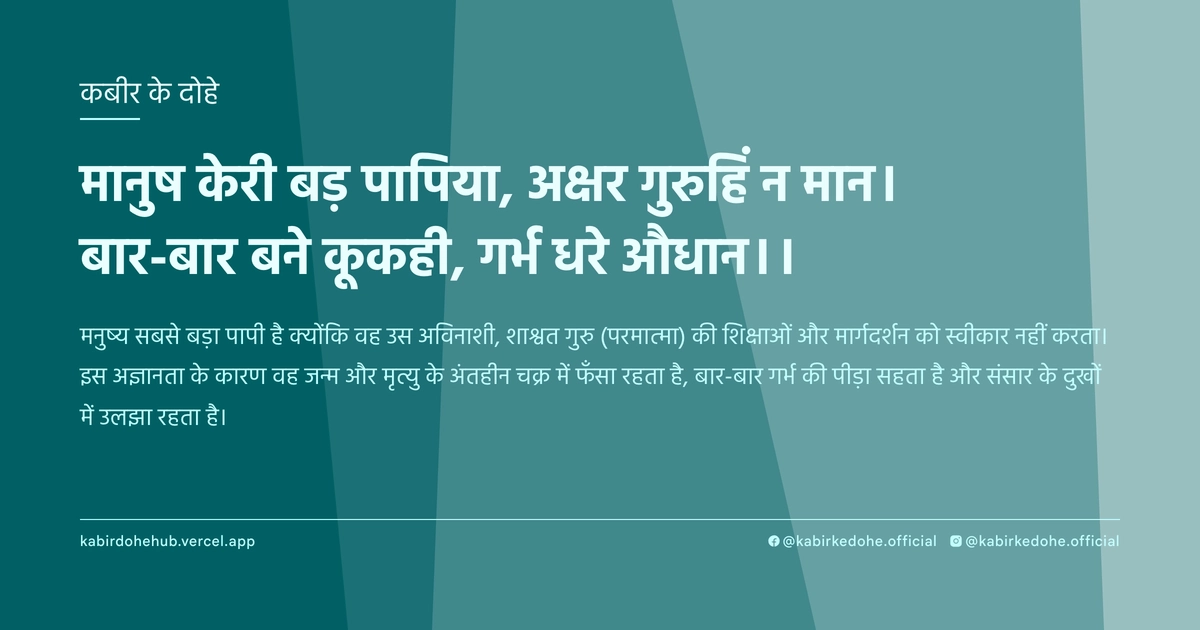
मानुष केरी बड़ पापिया, अक्षर गुरुहिं न मान।
बार-बार बने कूकही, गर्भ धरे औधान।।
Maanush keri bad paapiya, akshar guruhin na maan. Baar-baar bane kookahi, garbh dhare audhaan.
इस पृष्ठ पर इस कबीर दोहे का अर्थ (meaning), हिंदी व्याख्या और अंग्रेज़ी अनुवाद, दार्शनिक विश्लेषण और व्यावहारिक जीवन सीख दी गई है। यह दोहा गुरु महत्व (The Guru's Importance) विषय से जुड़ा है — Kabir doha meaning and explanation in Hindi and English.
अर्थ (Meaning):
मनुष्य सबसे बड़ा पापी है क्योंकि वह उस अविनाशी, शाश्वत गुरु (परमात्मा) की शिक्षाओं और मार्गदर्शन को स्वीकार नहीं करता। इस अज्ञानता के कारण वह जन्म और मृत्यु के अंतहीन चक्र में फँसा रहता है, बार-बार गर्भ की पीड़ा सहता है और संसार के दुखों में उलझा रहता है।
Humanity commits the greatest transgression not through outward sin, but through the refusal to acknowledge the Eternal Guru—the timeless Truth within. By ignoring this divine guidance, the soul remains trapped in the grueling cycle of rebirth, repeatedly enduring the agony of the womb and the tragedy of transient existence.
व्याख्या (Interpretation):
कबीर यहाँ 'पाप' को नैतिक अपराध के बजाय आध्यात्मिक अज्ञानता के रूप में परिभाषित करते हैं। 'अक्षर गुरु' का अर्थ केवल एक भौतिक शिक्षक नहीं, बल्कि वह अविनाशी सत्य (Omkar/Brahman) है जो सृष्टि का आधार है। जब मनुष्य अपनी अहंकार-मयी पहचान को सत्य से ऊपर रखता है, तो वह माया के जाल में फँस जाता है। यह दोहा निरगुण भक्ति के उस सिद्धांत को दर्शाता है जहाँ ईश्वर किसी मूर्ति में नहीं, बल्कि उस शाश्वत ज्ञान में है जिसे पहचानना आवश्यक है। गर्भ में 'औधान' (उल्टा) होने का रूपक यह दर्शाता है कि बिना आध्यात्मिक ज्ञान के, जीवन की दिशा विपरीत हो जाती है और आत्मा अपनी वास्तविक प्रकृति से दूर भटकती रहती है। यह अद्वैत वेदांत के उस विचार से मेल खाता है जहाँ अविद्या (अज्ञान) ही बंधन का मुख्य कारण है।
Kabir redefines 'sin' not as a moral failing, but as the profound spiritual ignorance of the Eternal Guru. The 'Akshar Guru' refers not to a physical preceptor, but to the Imperishable Truth—the formless Brahman—that sustains the universe. When a human prioritizes the egoic identity over this timeless reality, they fall prey to Maya, the cosmic illusion. This verse embodies the essence of Nirgun Bhakti, asserting that liberation comes not from rituals, but from realizing the formless divinity within. The metaphor of being 'inverted' in the womb suggests that without spiritual alignment, the soul's journey is perverse and contrary to its true purpose. It aligns with Advaita Vedanta, where Avidya (ignorance) is the primary shackle preventing the Atman from recognizing its oneness with the Absolute.
दार्शनिक विश्लेषण (Philosophical Analysis):
कबीर का यह दोहा उस सामाजिक और धार्मिक परिवेश की प्रतिक्रिया है जहाँ लोग बाहरी कर्मकांडों और पाखंडों में डूबे थे। उन्होंने स्पष्ट किया कि मोक्ष किसी तीर्थ या मंदिर से नहीं, बल्कि 'अक्षर' यानी अविनाशी ज्ञान के साक्षात्कार से मिलता है। यहाँ 'पाप' का अर्थ है अपनी वास्तविक प्रकृति को भूल जाना। कबीर का दृष्टिकोण सूफी मत के 'फना' (अहंकार का विनाश) और वेदांत के 'ज्ञान मार्ग' का एक अनूठा संगम है।
वे इस बात पर जोर देते हैं कि मनुष्य का सबसे बड़ा दुख उसकी अपनी जिद्द और अहंकार है, जो उसे सत्य को स्वीकार करने से रोकता है। जब तक मनुष्य यह मानता है कि वह केवल यह शरीर है, वह जन्म-मृत्यु के चक्र (Samsara) से मुक्त नहीं हो सकता। यह विचार जाति और धर्म की सीमाओं को तोड़ता है, क्योंकि अज्ञानता सार्वभौमिक है और ज्ञान का मार्ग सबके लिए खुला है।
दार्शनिक रूप से, कबीर यहाँ 'गुरु' को एक सिद्धांत के रूप में प्रस्तुत कर रहे हैं। गुरु वह प्रकाश है जो अंधकार को मिटाता है। यदि मनुष्य उस आंतरिक प्रकाश (Inner Light) को नकारता है, तो वह केवल भौतिक सुखों की खोज में भटकता रहता है, जो अंततः उसे और अधिक पीड़ा की ओर ले जाते हैं।
यह दोहा इस बात की चेतावनी है कि आध्यात्मिक आलस्य और अहंकार का परिणाम केवल पुनरावृत्ति है। बार-बार वही गलतियाँ करना, वही दुख सहना और वही भ्रम पालना ही वास्तविक नरक है। कबीर हमें याद दिलाते हैं कि मुक्ति के लिए सबसे पहले अपनी अज्ञानता को स्वीकार करना पड़ता है।
अंततः, यह विश्लेषण हमें यह समझने पर मजबूर करता है कि वास्तविक धर्म वह है जो मनुष्य को उसके 'स्व' (Self) से मिलाए। जब तक हम बाहरी दुनिया में सत्य खोजते रहेंगे, हम उस 'अक्षर गुरु' की उपेक्षा करते रहेंगे जो हमारे भीतर ही विराजमान है।
Kabir's verse is a visceral reaction to the socio-religious climate of his era, characterized by rigid ritualism and superficial piety. He asserts that liberation is not found in pilgrimages or temples, but through the realization of 'Akshar'—the Imperishable Truth. Here, 'sin' is redefined as the existential failure to recognize one's own divine nature, shifting the focus from moral transgression to spiritual blindness.
His perspective is a masterful synthesis of the Sufi concept of 'Fana' (the annihilation of the ego) and the Vedantic 'Jnana Marga' (the path of knowledge). Kabir emphasizes that the greatest human suffering stems from the stubbornness of the ego, which creates a veil between the seeker and the Truth. As long as one identifies solely with the physical body, they remain bound to the relentless cycle of Samsara.
Philosophically, Kabir presents the 'Guru' not merely as a person, but as a cosmic principle of illumination. The Guru is the catalyst that dissolves the illusion of duality. By rejecting this internal guidance, the human spirit wanders in a wasteland of material desires, which only deepen the bondage of the soul.
This verse serves as a stern warning against spiritual inertia. The 'sin' is the repetition of the same errors across lifetimes—the cycle of birth and death is the physical manifestation of a psychological refusal to wake up. True liberation requires the courage to admit one's ignorance and surrender the ego to the timeless wisdom.
Ultimately, this analysis reveals that true religion is the process of returning to the Self. By searching for God in the external world, humanity ignores the 'Akshar Guru' residing within. The tragedy of the human condition is not the presence of pain, but the refusal to see the light that can end it.
मूल संदेश (Core Message):
- अज्ञानता ही सबसे बड़ा आध्यात्मिक पाप है।
- बाहरी गुरु से पहले आंतरिक सत्य को पहचानें।
- अहंकार का त्याग ही जन्म-मृत्यु के चक्र से मुक्ति है।
- सत्य को नकारना स्वयं को पीड़ा में डालना है।
- शाश्वत ज्ञान ही वास्तविक मोक्ष का एकमात्र मार्ग है।
- Spiritual ignorance is the ultimate transgression.
- Recognize the internal Truth before seeking external guides.
- The dissolution of ego is the only exit from the cycle of suffering.
- Denying the Truth is an act of self-inflicted agony.
- Eternal wisdom is the sole gateway to authentic liberation.
व्यावहारिक उदाहरण (Practical Example):
वाराणसी के घाटों पर रहने वाले एक वृद्ध बुनकर, माधव, का जीवन केवल धागों को जोड़ने और कपड़े बुनने तक सीमित था। वह बहुत धार्मिक था, लेकिन उसका धर्म केवल दिखावे और दूसरों को नीचा दिखाने में था। वह खुद को बहुत बड़ा भक्त मानता था क्योंकि वह रोज़ घंटों मंदिर में समय बिताता था, लेकिन उसके मन में अपने पड़ोसियों के प्रति घृणा और अहंकार भरा था।
एक दिन उसकी मुलाकात एक फकीर से हुई, जिसने माधव के महंगे रेशमी कपड़ों और उसकी लंबी मालाओं को देखकर मुस्कुराते हुए कहा, "माधव, तूने कपड़े तो बहुत सुंदर बुने, लेकिन अपनी आत्मा के फटे हुए कपड़ों को कभी नहीं देखा। तू बाहर के गुरुओं को पूजता है, पर भीतर के उस अक्षर गुरु को भूल गया जो तुझे सच बता रहा है।"
माधव को पहले तो यह बात चुभी, लेकिन फिर उसने गौर किया कि उसकी पूरी ज़िंदगी केवल 'दिखावे' की दौड़ थी। वह हर बार अपनी गलतियों को धर्म की आड़ में छुपाता था, लेकिन उसके मन की अशांति कभी खत्म नहीं हुई। उसे महसूस हुआ कि वह बार-बार एक ही मानसिक पीड़ा के चक्र में घूम रहा है—क्रोध, फिर पश्चाताप, और फिर वही अहंकार।
उसने महसूस किया कि उसका 'पाप' यह नहीं था कि उसने कोई चोरी की या झूठ बोला, बल्कि यह था कि उसने कभी अपनी अंतरात्मा की आवाज़ (अक्षर गुरु) को नहीं सुना। उसने अपनी पहचान को केवल एक 'धार्मिक व्यक्ति' के रूप में सीमित कर लिया था, जबकि वह वास्तव में एक अहंकारी व्यक्ति था।
इस बोध ने माधव के भीतर एक गहरा परिवर्तन लाया। उसने मंदिर जाना कम नहीं किया, लेकिन अब वह मंदिर में अपनी इच्छाएं मांगने नहीं, बल्कि अपने अहंकार को विसर्जित करने जाने लगा। उसने अपने उन पड़ोसियों से माफी मांगी जिन्हें उसने सालों तक तुच्छ समझा था।
उसने पाया कि जब उसने बाहरी आडंबरों को छोड़कर आंतरिक सत्य को स्वीकार किया, तो उसके जीवन का तनाव गायब हो गया। वह अब केवल कपड़े नहीं बुन रहा था, बल्कि वह प्रेम और करुणा के धागों से रिश्तों को बुनने लगा।
उसकी आँखों में अब वह कठोरता नहीं थी, बल्कि एक गहरी शांति थी। उसने समझ लिया था कि असली मोक्ष किसी तीर्थ में नहीं, बल्कि इस बात में है कि हम अपने भीतर के उस शाश्वत सत्य के प्रति कितने समर्पित हैं।
माधव की कहानी यह सिखाती है कि जब तक हम अपनी गलतियों को बाहरी कारणों पर डालते हैं, हम उसी चक्र में फंसे रहते हैं। जिस दिन हम आंतरिक मार्गदर्शन को स्वीकार करते हैं, उसी क्षण जन्म-मृत्यु का मानसिक चक्र समाप्त हो जाता है।
In the bustling ghats of Varanasi lived an elderly weaver named Madhav, whose life was confined to the rhythmic interlacing of threads. Madhav was outwardly devout, but his spirituality was a facade of performance and superiority. He believed himself to be a great devotee because he spent hours in the temple, yet his heart was riddled with disdain for his neighbors and a towering ego.
One day, he encountered a wandering Sufi mystic who looked at Madhav's expensive silk robes and long prayer beads and smiled. The mystic said, "Madhav, you have woven beautiful fabrics, but you have never looked at the tattered rags of your own soul. You worship external gurus, yet you ignore the Akshar Guru within who whispers the truth to you every moment."
Initially, Madhav felt offended, but the words lingered. He began to realize that his entire existence had been a race of appearances. He had consistently masked his flaws behind the veil of religion, yet his inner turmoil never ceased. He saw that he was trapped in a mental loop—anger, followed by superficial repentance, and then a return to the same arrogance.
He understood that his 'sin' was not a specific moral crime, but the systemic refusal to listen to the voice of his own conscience—the Akshar Guru. He had limited his identity to being a 'religious man,' while in reality, he was merely an egoist in disguise.
This realization triggered a profound transformation. Madhav did not stop visiting the temple, but his purpose shifted; he no longer went to demand favors from the divine, but to dissolve his ego. He sought forgiveness from the neighbors he had belittled for decades.
He discovered that by abandoning external pretenses and embracing internal truth, the chronic tension in his life vanished. He stopped merely weaving fabric and began weaving relationships with threads of love and compassion.
The hardness in his eyes was replaced by a deep, luminous peace. He understood that true liberation was not found in a pilgrimage, but in the absolute surrender to the timeless truth residing within.
Madhav's story illustrates that as long as we attribute our failures to external circumstances, we remain in the cycle of suffering. The moment we accept internal guidance, the psychological cycle of birth and death—the repetition of error—ends.
अभ्यास मार्गदर्शन (Practice Guidance):
- प्रतिदिन 20 मिनट मौन रहकर 'साक्षी भाव' का अभ्यास करें, जहाँ आप अपने विचारों को बिना किसी निर्णय के केवल देखें।
- एक डायरी लिखें जिसमें आप उन क्षणों को दर्ज करें जब आपका अहंकार (Ego) आपको सत्य देखने से रोकता है।
- व्यवहार परिवर्तन: जब भी किसी के प्रति क्रोध या निर्णय (Judgment) आए, रुकें और पूछें, "क्या यह मेरा अहंकार बोल रहा है या मेरा आंतरिक गुरु?"
- निदान चेकलिस्ट: क्या मैं अभी भी बाहरी प्रशंसा की तलाश कर रहा हूँ? क्या मैं अपनी गलतियों के लिए दूसरों को दोष देता हूँ? क्या मेरी शांति बाहरी परिस्थितियों पर निर्भर है? (यदि हाँ, तो आप अभी भी अज्ञान के चक्र में हैं)।
- Practice 'Witness Consciousness' (Sakshi Bhava) for 20 minutes daily, observing your thoughts without judgment or attachment.
- Maintain a self-inquiry journal to document specific instances where your ego obstructed your perception of the truth.
- Behavioral Shift: Whenever anger or judgment arises, pause and ask, "Is this my ego speaking, or is this the guidance of the Inner Guru?"
- Diagnostic Checklist: Am I still seeking external validation? Do I blame others for my failures? Is my peace dependent on external circumstances? (If yes, you are still operating within the cycle of ignorance).
चिंतन प्रश्न (Reflection Questions):
- मेरी वह कौन सी मान्यता है जिसे मैं सत्य मानकर बैठा हूँ, लेकिन वह वास्तव में मेरा अहंकार है?
- मैं अपनी सार्वजनिक छवि (Public Image) को बनाए रखने के लिए अपने भीतर के सत्य को कितनी बार दबाता हूँ?
- क्या मैं वास्तव में आध्यात्मिक विकास चाहता हूँ, या मैं केवल 'आध्यात्मिक' दिखने का नाटक कर रहा हूँ?
- मेरे जीवन में वह कौन सा पैटर्न है जो बार-बार दोहराया जा रहा है, और वह मुझे क्या सिखाने की कोशिश कर रहा है?
- यदि मैं आज अपनी सारी उपाधियों और पहचान खो दूँ, तो मेरे भीतर क्या बचेगा?
- Which of my deeply held beliefs is actually a construct of my ego rather than a truth?
- How often do I suppress my internal truth to maintain a curated public image?
- Do I genuinely seek spiritual evolution, or am I merely performing the role of a 'spiritual person'?
- What recurring pattern of suffering exists in my life, and what is it trying to teach me about my ignorance?
- If I were stripped of all my titles and social identities today, what essence would remain?