
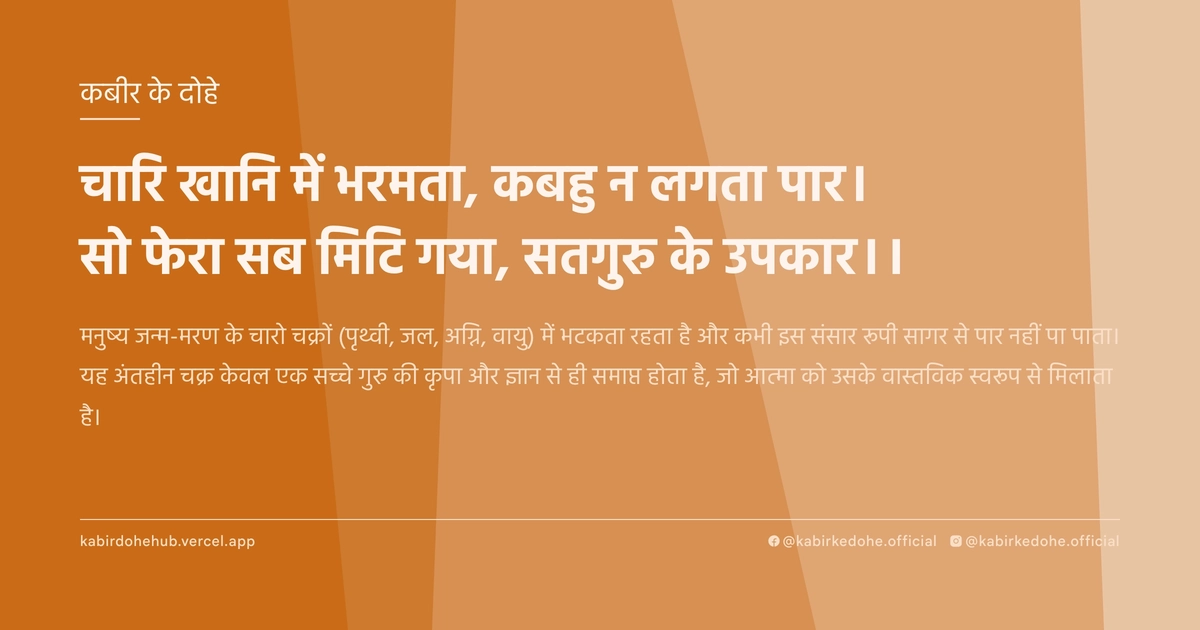
चारि खानि में भरमता, कबहु न लगता पार।
सो फेरा सब मिटि गया, सतगुरु के उपकार।।
Chaari khaani mein bharmata, kabhu na lagta paar. So phera sab miti gaya, satguru ke upkaar.
इस पृष्ठ पर इस कबीर दोहे का अर्थ (meaning), हिंदी व्याख्या और अंग्रेज़ी अनुवाद, दार्शनिक विश्लेषण और व्यावहारिक जीवन सीख दी गई है। यह दोहा गुरु महत्व (The Guru's Importance) विषय से जुड़ा है — Kabir doha meaning and explanation in Hindi and English.
अर्थ (Meaning):
मनुष्य जन्म-मरण के चारो चक्रों (पृथ्वी, जल, अग्नि, वायु) में भटकता रहता है और कभी इस संसार रूपी सागर से पार नहीं पा पाता। यह अंतहीन चक्र केवल एक सच्चे गुरु की कृपा और ज्ञान से ही समाप्त होता है, जो आत्मा को उसके वास्तविक स्वरूप से मिलाता है।
The human soul wanders aimlessly through the four elemental realms of existence, trapped in a cycle of birth and rebirth without ever reaching the shore of liberation. This perpetual wandering and the agony of cyclic existence are completely erased only through the grace and transformative wisdom of a True Guru.
व्याख्या (Interpretation):
यहाँ 'चारि खानि' का अर्थ केवल भौतिक तत्वों से नहीं, बल्कि उन मानसिक अवस्थाओं और वासनाओं से है जो जीव को बंधन में रखती हैं। कबीर कहते हैं कि अज्ञानता के कारण हम माया के जाल में उलझे रहते हैं, जहाँ हम सुख की खोज में और अधिक दुखी होते जाते हैं। यह 'फेरा' या चक्र वास्तव में अहंकार का चक्र है। जब सतगुरु का ज्ञान आता है, तो यह भ्रम टूट जाता है कि हम शरीर हैं। यह बोध कि आत्मा और परमात्मा एक ही हैं (अद्वैत), जीव को जन्म-मृत्यु के भय से मुक्त कर देता है और उसे शून्य या परम पद की ओर ले जाता है।
The 'four realms' (Chari Khani) refer not merely to physical elements but to the psychological states and cravings that bind the soul to materiality. Kabir suggests that due to Avidya (ignorance), we are entangled in the web of Maya, chasing illusory pleasures that only deepen our suffering. This 'cycle' is essentially the rotation of the ego. When the Satguru's grace descends, the illusion of separate identity shatters. By realizing the non-duality of Atman and Brahman, the soul transcends the fear of death and birth, moving from the fragmented self to the indivisible Absolute.
दार्शनिक विश्लेषण (Philosophical Analysis):
कबीर का यह दोहा निर्गुण भक्ति और अद्वैत वेदांत का एक उत्कृष्ट संगम है। ऐतिहासिक रूप से, कबीर ने उस समय के कर्मकांडीय धर्म का विरोध किया जहाँ मोक्ष को केवल कठिन अनुष्ठानों या जातिगत श्रेष्ठता से जोड़ा गया था। उन्होंने तर्क दिया कि मुक्ति किसी बाहरी मंदिर या मस्जिद में नहीं, बल्कि आंतरिक जागरण में है।
दार्शनिक स्तर पर, 'चारि खानि' का उल्लेख बौद्ध धर्म के भुवन और हिंदू धर्म के पुनर्जन्म के सिद्धांतों की याद दिलाता है। कबीर यहाँ यह स्पष्ट करते हैं कि जब तक 'मैं' (अहंकार) जीवित है, तब तक जीव प्रकृति के तत्वों के अधीन रहेगा। यह सूफी मत के 'फना' (अहंकार का विनाश) के समान है, जहाँ साधक अपनी व्यक्तिगत पहचान को ईश्वर की इच्छा में विलीन कर देता है।
वेदांत के अनुसार, हम वास्तव में मुक्त हैं, लेकिन माया के कारण हम स्वयं को सीमित मानते हैं। सतगुरु यहाँ कोई व्यक्ति नहीं, बल्कि वह 'चेतना' है जो हमें याद दिलाती है कि हम शरीर नहीं, बल्कि शुद्ध चैतन्य हैं। यह ज्ञान ही वह कुंजी है जो पुनर्जन्म के द्वार बंद करती है।
कबीर का प्रहार उन पंडितों और मौलवियों पर था जो केवल शास्त्रों की व्याख्या करते थे लेकिन अनुभव से शून्य थे। उनके लिए 'उपकार' का अर्थ है वह अनुभवजन्य ज्ञान जो शब्दों से परे है। यह विश्लेषण दर्शाता है कि मुक्ति कोई भविष्य की घटना नहीं, बल्कि वर्तमान में अज्ञान के मिटने की प्रक्रिया है।
अंततः, यह दोहा मनोवैज्ञानिक रूपांतरण की बात करता है। जब मनुष्य यह समझ जाता है कि उसकी सारी खोज बाहर नहीं बल्कि भीतर है, तो वह संसार के द्वंद्वों (सुख-दुख, लाभ-हानि) से ऊपर उठ जाता है। यही वह बिंदु है जहाँ 'फेरा' समाप्त होता है और शाश्वत शांति का अनुभव होता है।
This couplet is a profound synthesis of Nirgun Bhakti and Advaita Vedanta. Historically, Kabir challenged the ritualistic orthodoxy of his era, which tied liberation to rigid ceremonies or caste hierarchies. He asserted that salvation is not found in external shrines but through internal awakening.
Philosophically, the reference to 'four realms' echoes Buddhist cosmology and Hindu theories of Samsara. Kabir clarifies that as long as the 'I' (ego) persists, the soul remains subject to the laws of nature. This mirrors the Sufi concept of 'Fana' (annihilation of the self), where the seeker dissolves their individual identity into the Divine Will.
According to Vedanta, we are inherently free, yet Maya creates the illusion of limitation. The Satguru here is not merely a human teacher but the 'Awakened Consciousness' that reminds us we are not the body, but pure awareness. This realization is the only key that locks the doors of rebirth.
Kabir’s critique was aimed at the scholars who prioritized textual interpretation over direct experience. For him, 'Upkaar' (grace) is the experiential knowledge that transcends language. This analysis reveals that liberation is not a future destination but the current process of dissolving ignorance.
Ultimately, the verse speaks of a psychological metamorphosis. When a person realizes that the quest is internal rather than external, they rise above the dualities of pleasure and pain. This is the precise moment where the 'cycle' ends and eternal peace begins.
मूल संदेश (Core Message):
- अज्ञानता ही वह बंधन है जो हमें जन्म-मृत्यु के चक्र में फँसाए रखती है।
- बाहरी अनुष्ठान केवल भ्रम हैं; वास्तविक मुक्ति आंतरिक बोध से आती है।
- गुरु वह दर्पण है जो हमें हमारे वास्तविक, दिव्य स्वरूप का दर्शन कराता है।
- अहंकार का विसर्जन ही संसार रूपी सागर से पार उतरने का एकमात्र मार्ग है।
- सत्य कहीं बाहर नहीं, बल्कि वर्तमान क्षण की जागरूकता में निहित है।
- Ignorance is the only chain that binds us to the cycle of birth and death.
- External rituals are mere illusions; true liberation stems from internal realization.
- The Guru is the mirror that reveals our authentic, divine nature.
- The dissolution of the ego is the only vessel capable of crossing the ocean of existence.
- Truth resides not in the distance, but in the awareness of the present moment.
व्यावहारिक उदाहरण (Practical Example):
वाराणसी के घाटों पर रहने वाले एक वृद्ध विधवा, जानकी, का जीवन केवल परंपराओं और शोक के इर्द-गिर्द सिमटा था। वह प्रतिदिन घंटों पूजा करती और यह मानती कि उसके पिछले जन्मों के पापों के कारण ही वह इस दुखद स्थिति में है। वह स्वयं को एक 'पापी' और 'असहाय' आत्मा मानती थी, जो बस मोक्ष की प्रतीक्षा कर रही थी।
उसका पूरा दिन इस बात की चिंता में बीतता कि वह अगले जन्म में बेहतर स्थिति में कैसे आएगी। वह अपनी वर्तमान पीड़ा को ईश्वर की इच्छा मानकर चुपचाप सहती थी, लेकिन उसके भीतर एक गहरा असंतोष और अधूरापन था। वह शास्त्रों के उन शब्दों में उलझी थी जो उसे डराते थे।
एक दिन उसकी मुलाकात एक घुमक्कड़ फकीर से हुई, जिसने उसे कबीर का यह दोहा सुनाया। फकीर ने उससे पूछा, 'तुम किस जन्म की बात कर रही हो, जब तुम अभी इस पल में जीवित ही नहीं हो?' जानकी हैरान रह गई।
फकीर ने समझाया कि वह जिस 'पाप' और 'पुण्य' के चक्र में फंसी है, वह केवल उसके मन का भ्रम है। उसने कहा कि वह खुद को एक 'विधवा' या 'पापी' मानकर जिस पहचान को ढो रही है, वही उसका असली बंधन है।
जानकी ने महसूस किया कि वह अपनी पहचान बाहरी लेबलों से बना रही थी। उसने अपनी पूजा को 'पाप धोने' के साधन के बजाय 'स्वयं को जानने' का माध्यम बनाया। उसने यह समझना शुरू किया कि वह शरीर की सीमाओं से परे एक अनंत चेतना है।
धीरे-धीरे, उसका डर गायब हो गया। उसने घाटों पर अन्य दुखी महिलाओं की मदद करना शुरू किया, न कि इसलिए कि उसे पुण्य कमाना था, बल्कि इसलिए क्योंकि वह उनमें अपनी ही आत्मा को देख रही थी।
उसका व्यवहार बदल गया; वह अब मोक्ष की याचना नहीं करती थी, बल्कि वह स्वयं मोक्षमय हो गई थी। उसने महसूस किया कि जिस 'पार' जाने की वह कोशिश कर रही थी, वह पार उसके भीतर ही था।
यह 'कबीर ट्विस्ट' था—जब उसने बाहरी चक्रों (परंपराओं और पाप-पुण्य) को छोड़कर आंतरिक सत्य को पकड़ा, तो उसका मानसिक संघर्ष समाप्त हो गया। वह अब मृत्यु से नहीं डरती थी, क्योंकि उसने जान लिया था कि वह कभी मरती ही नहीं।
Janaki, an elderly widow living on the ghats of Varanasi, had a life confined to traditions and mourning. She spent hours in ritual prayer, believing her current suffering was a result of sins from past lives. She viewed herself as a 'sinful' and 'helpless' soul, merely waiting for liberation.
Her days were consumed by anxiety over how to secure a better rebirth. She accepted her pain as divine will, yet harbored a deep, unspoken dissatisfaction. She was entangled in scriptural warnings that fueled her fear.
One day, she encountered a wandering fakir who recited this specific Doha to her. The fakir asked her, 'Why do you speak of past and future births, when you are not even truly alive in this present moment?' Janaki was stunned.
The fakir explained that the cycle of 'sin' and 'merit' she feared was a mental construct. He told her that the identity she clung to—that of a 'widow' or a 'sinner'—was her only true bondage.
Janaki realized she had built her identity around external labels. She shifted her prayers from 'cleansing sins' to 'knowing the self.' She began to perceive herself not as a limited body, but as infinite consciousness.
Gradually, her fear vanished. She started helping other grieving women on the ghats, not to earn spiritual merit, but because she saw her own soul reflected in them.
Her behavior transformed; she no longer begged for salvation because she had become the embodiment of liberation. She realized that the 'shore' she was trying to reach was already within her.
This was the 'Kabir Twist'—by abandoning the external cycles of tradition and guilt and embracing internal truth, her mental turmoil ceased. She no longer feared death, for she understood that her essence was immortal.
अभ्यास मार्गदर्शन (Practice Guidance):
- प्रतिदिन 20 मिनट मौन ध्यान करें, जहाँ आप अपने विचारों को केवल एक साक्षी (Witness) की तरह देखें, बिना किसी निर्णय के।
- एक डायरी लिखें जिसमें आप उन 'मानसिक चक्रों' (जैसे गुस्सा, ईर्ष्या, या डर) को सूचीबद्ध करें जो बार-बार आपके जीवन में लौटते हैं।
- स्वयं से पूछें: 'यदि मेरी सामाजिक पहचान, मेरा नाम और मेरा इतिहास छीन लिया जाए, तो वास्तव में मैं कौन हूँ?'
- निदान चेकलिस्ट: क्या आप अभी भी अपनी खुशियों को भविष्य की किसी घटना या अगले जन्म पर टाल रहे हैं? यदि हाँ, तो आप अभी भी 'फेरे' में हैं।
- Practice 20 minutes of silent meditation daily, observing your thoughts as a detached witness without judgment.
- Maintain a journal to list the 'mental cycles' (such as anger, jealousy, or fear) that repeatedly recur in your life.
- Contemplate the question: 'If my social identity, name, and history were stripped away, who would I actually be?'
- Diagnostic Checklist: Are you still postponing your happiness to a future event or a next life? If yes, you are still trapped in the 'cycle'.
चिंतन प्रश्न (Reflection Questions):
- आप अपनी कौन सी ऐसी पहचान (Identity) को सबसे अधिक पकड़े हुए हैं, जिसे खोने का डर आपको डराता है?
- क्या आपकी आध्यात्मिक खोज वास्तव में मुक्ति के लिए है, या यह केवल एक 'बेहतर' जीवन की इच्छा है?
- आपके जीवन में वह कौन सा विचार या व्यवहार है जो एक अंतहीन चक्र की तरह बार-बार लौटकर आता है?
- क्या आप गुरु को एक व्यक्ति के रूप में देखते हैं, या अपने भीतर की जागृत चेतना के रूप में?
- यदि आज आपका शरीर समाप्त हो जाए, तो आपके पास ऐसा क्या बचेगा जिसे आप 'मैं' कह सकें?
- Which identity do you cling to most fiercely, and what fear arises when you imagine losing it?
- Is your spiritual quest truly for liberation, or is it merely a desire for a 'better' version of existence?
- What thought or behavioral pattern in your life returns like an endless cycle, trapping you in the same pain?
- Do you perceive the Guru as a physical person or as the awakened consciousness within yourself?
- If your body were to vanish today, what would remain that you could still call 'I'?